Copyright © my Wide White Wall
Design by Dzignine
Showing posts with label the wandering wonderer. Show all posts
Wednesday, January 09, 2013

CHASING THE KAWA-KAWA HILL WONDER

When my friends and I went to my hometown after our Caramoan weekend getaway in mid-2011, my aunts insisted that we should go visit this certain Kawa-Kawa before we head home to Manila the following morning.

But tropical storm Juaning got in our way, forcing us to stay home for the rest of the day instead of me touring my friends around the town.

A little more than a year later, I once again found myself being enticed by my aunts to see Kawa-Kawa. But this time no friends were in my tow.

Subscribing to my aunts' pitch with my dad and sis, we took the 30-minute ride to Kawa-Kawa Hill in Ligao City, bringing with us a large bottle of water and faith that we'd be able to reach the hilltop before the sun sets.
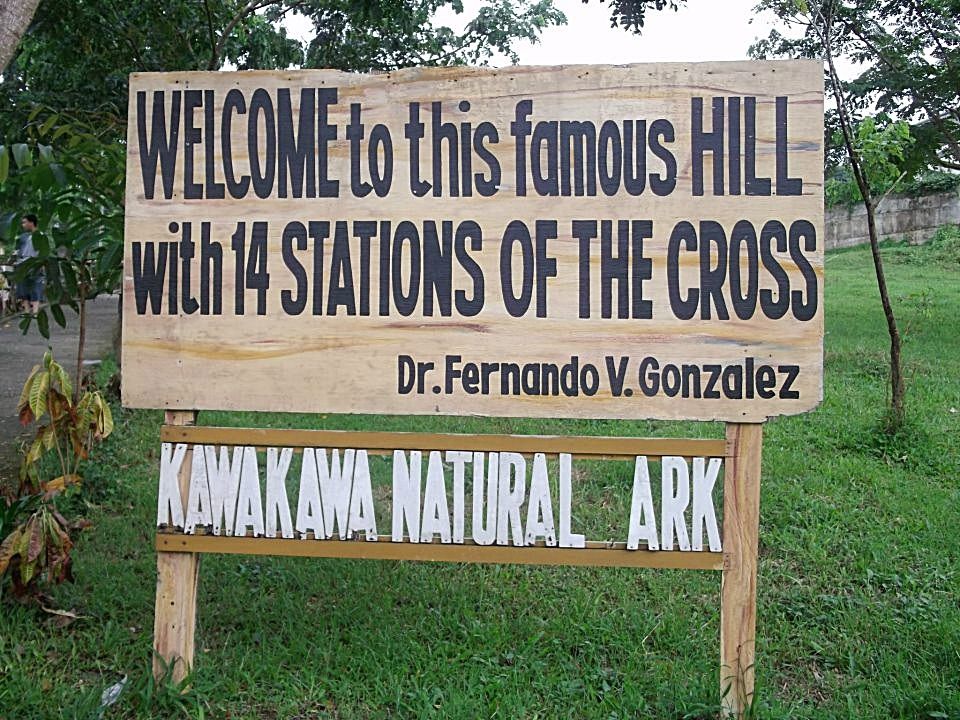
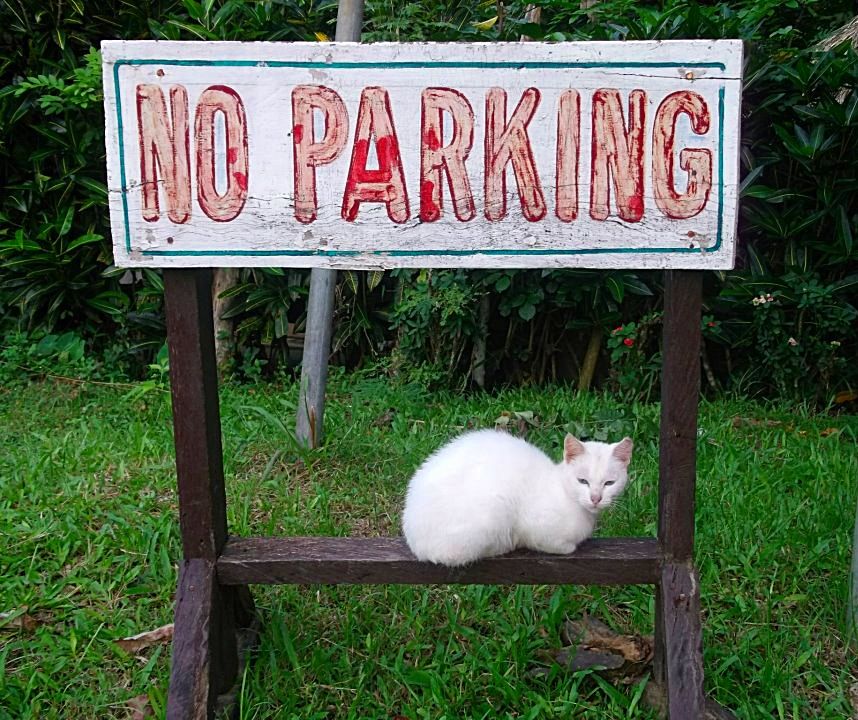
But not for this one. :D

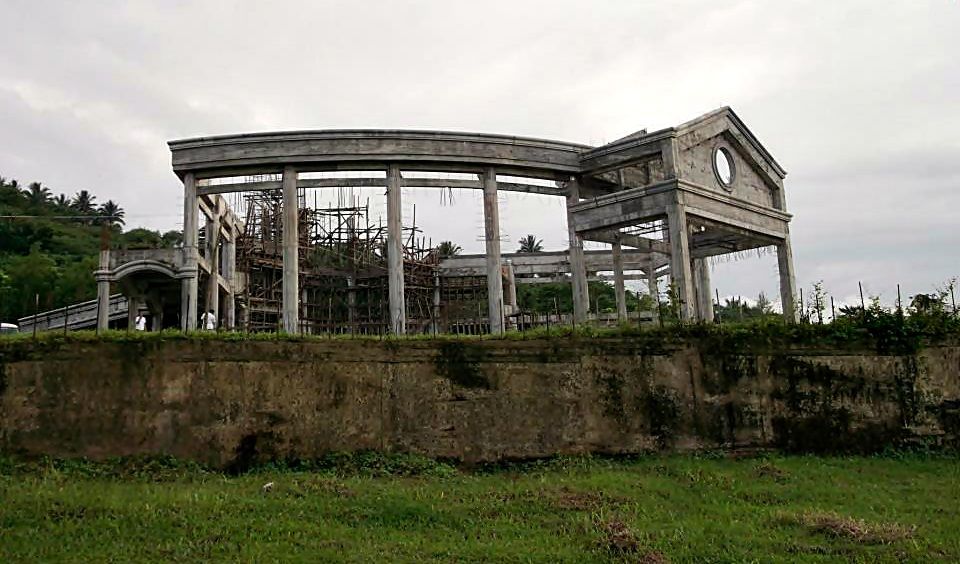
Our trek started off by marvelling at the huge Divine Mercy Shrine being constructed on an 800-square-meter land at the foot of the hill.

It is said that former governor Fernando Gonzalez, who also opened the Kawa-Kawa Hill Natural Park in California Village, Brgy. Tuburan to the public, donated this lot to the Divine Mercy Monastery of the Carmelite Nuns of the Holy Trinity about seven years ago.


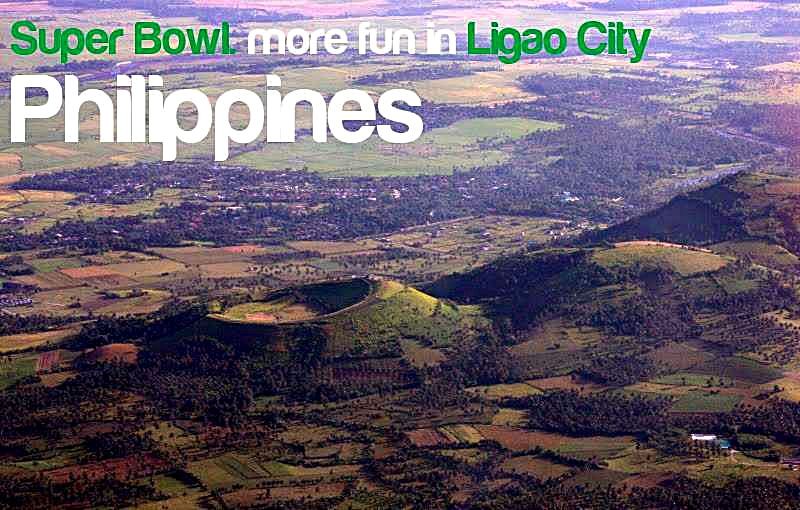
A little further ahead, a life-sized image of the Last Supper captured our interest. Turned out it is the first of the 14 life-sized Stations of the Cross placed along the 500-meter walkway and around the 836-meter crater ring of Kawa-Kawa. 
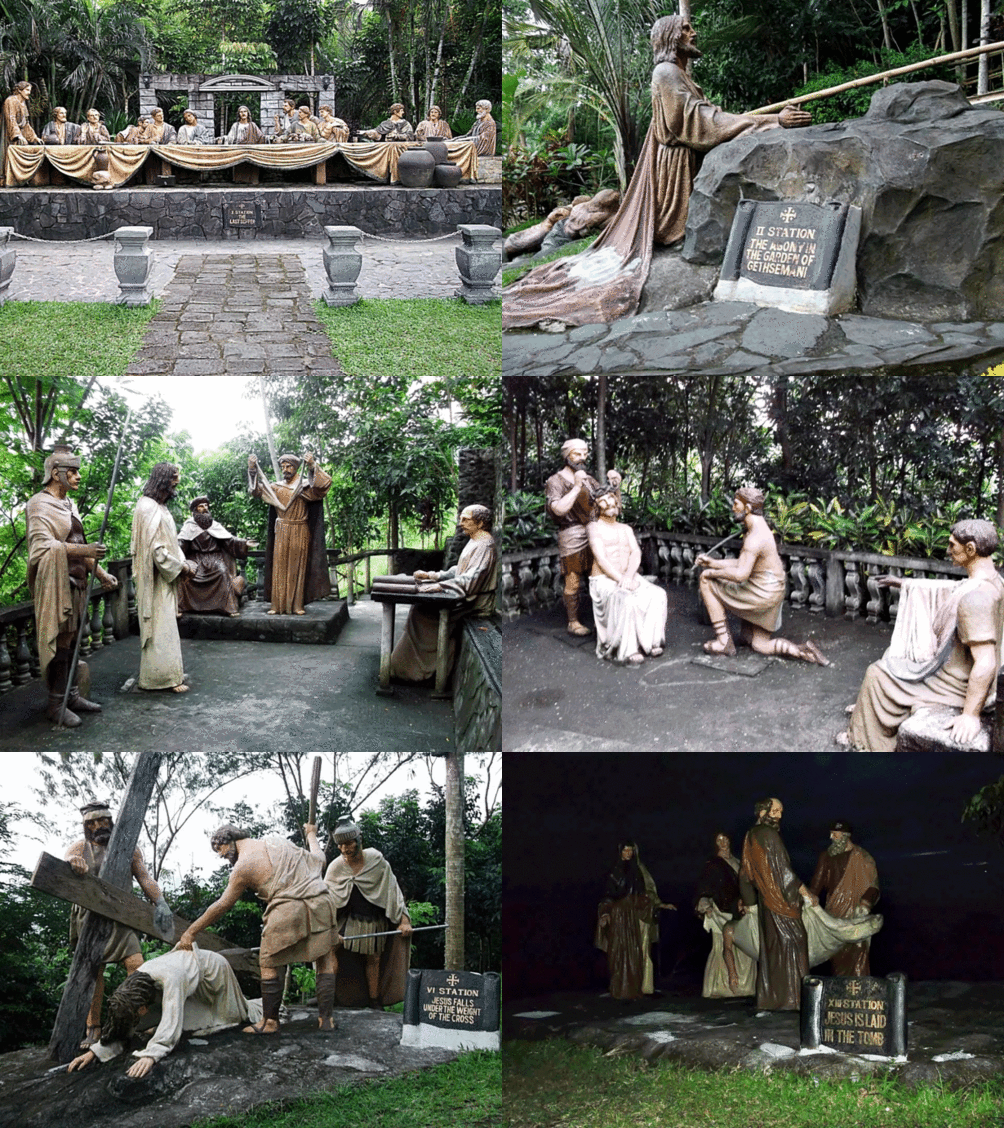
The first eight stations are in the walkway, while the remaining six are located around the crater ring.

To make Kawa-Kawa’s Way of the Cross more unique, the Carmelite nuns assigned the Last Supper to be its first station, veering away from the usual pattern which starts with the Agony in the Garden.
The statues – blessed and consecrated by bishops – were oddly inviting, that even though the time of our visit was not Holy Week, we still paused for a few minutes at each station along the pathway.
Realizing that we only had an hour’s leeway before nightfall, off we climbed again, catching a glimpse of what’s below us every now and then.
Trees attached with their local and scientific names as well as flowering plants continued to line our path to the top, as unpolluted air filled our lungs.
We even dropped by a mini zoo which houses some birds like Brahminy kite (lawin), serpent eagle (agila), and grass owl (kuwago). A common palm civet (musang) was also present.
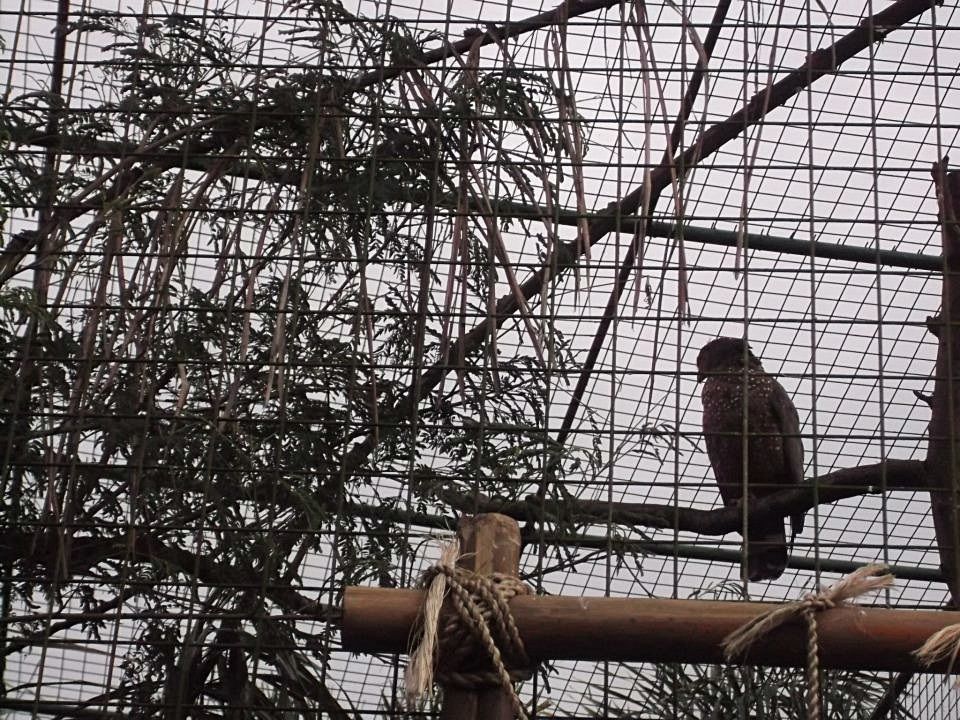
 
Along the way, my younger cousin pointed to the Boy Scouts of the Philippines Eagle Scout Advancement Camp and Facilities, where he said he joined other scouts in a jamboree held a few years back.
And though we did not have the chance to see it, he said there was also an area planted to sunflower somewhere nearby.
Without even noticing it at once, we finally reached our goal: not the hilltop but rather the hill's crater ring.
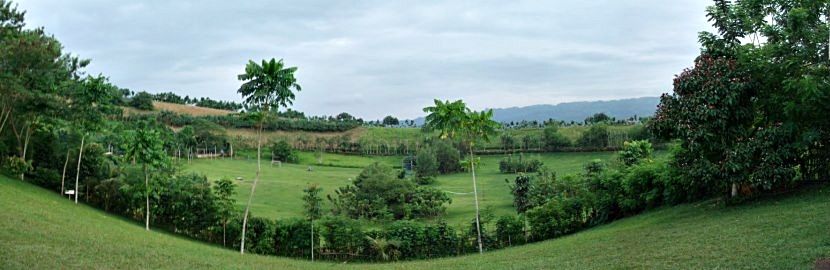


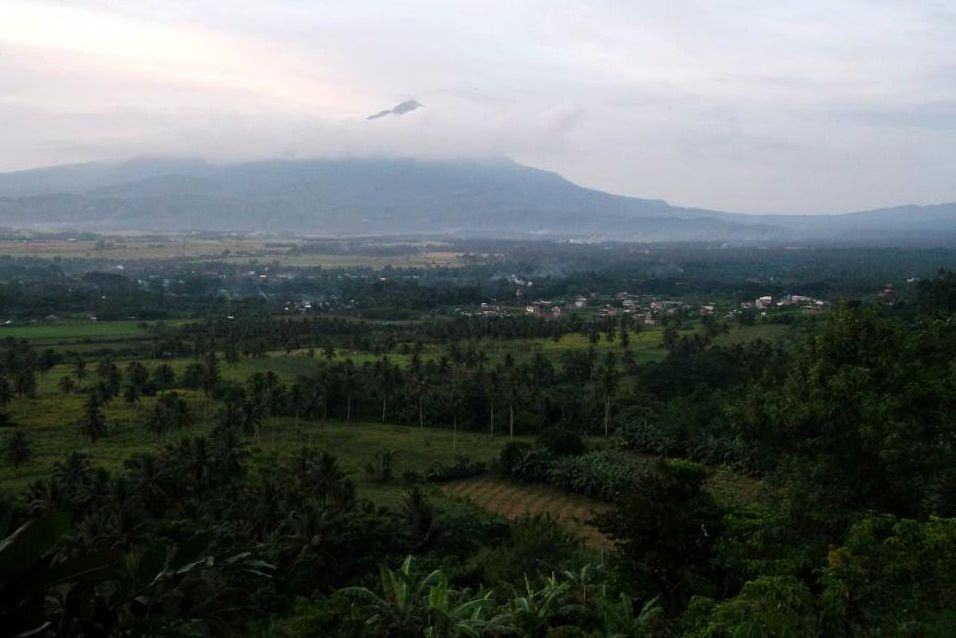
We stayed there awhile, savoring our awe-inspiring reward: a vista of green fields, nearby towns, unspoiled mountains and even of Mt. Mayon.
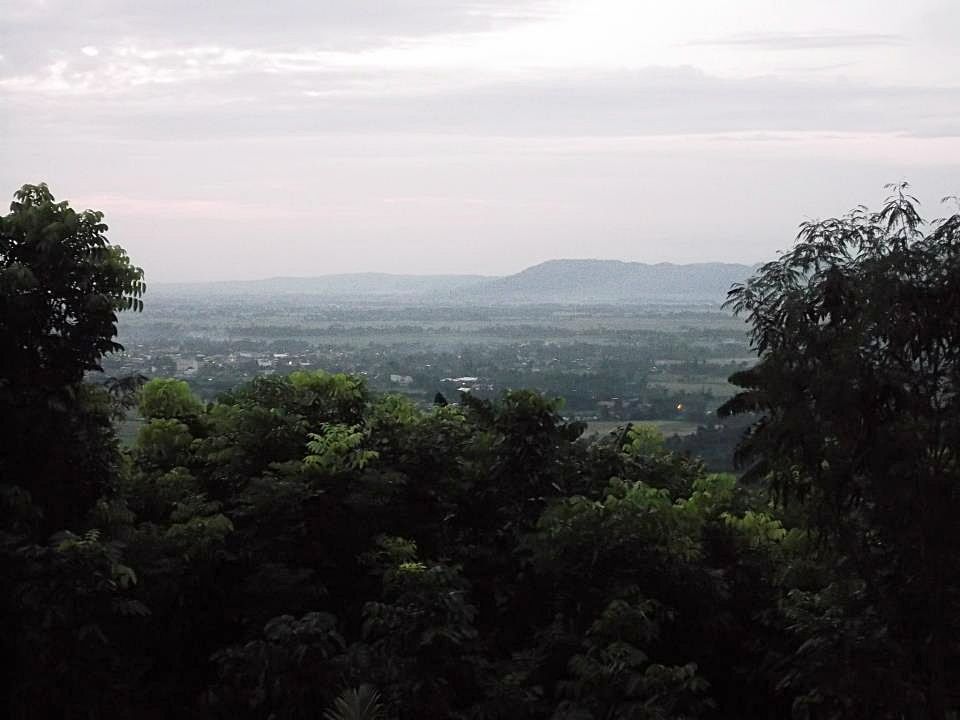


There stands the Mt. Mayon, the fearless! Oh, inspiring majestic grand! :)
 
Then one by one, lights started to appear, as if signalling that it was time for us to bid goodbye.
 
As we retraced our steps, I felt relieved. I finally discovered for myself why it’s called Kawa-Kawa. And I’m pretty sure that for our next hike, it is going to be a larger bottle of water and a rigid early schedule.Photobucket
 
(Photo credits: wowlegazpi.com/leinar guanzon)

Friday, May 25, 2012

BEING BACK IN BAGUIO BLISS (part 2)

They say that a worthwhile Baguio sojourn is not without dropping by the Good Shepherd Convent along Gibraltar Road (near Mines View Park) for pasalubong (homecoming gifts) shopping. And so, as our way of subscribing to this pitch, we made sure to have a stop at this place on our second and last day in Baguio.

The Good Shepherd Convent, established here in the Philippines in 1912, is being run by the Religious of the Good Shepherd nuns. In deference to their vision of “helping the most neglected and marginalized,” they founded the Mountain Maid Training Center. Chosen youth of the Mountain Province receive educational and livelihood assistance through the profits generated from the sale of Mountain Maid products, most famous of which are strawberry jam, ube jam, peanut brittle, and lengua de gato.
The store is said to be always brimming with buyers, and the time of our visit was no exception. To my recollection, there were others who even bought in quantities that they would leave Good Shepherd carrying two or more boxes of Mountain Maid products. I’m sure that meant more aid for the Cordillera youth.approve photo 1-good.gif

 (photo credits: manilamarketdotcom)
 
Our next stopover was at 50s Diner along Gen. Luna Road. To say that this joint is a favorite among diners -- tourists and locals alike -- is an understatement. To me, it seemed to be swollen with people any time of the day. We didn't even need to go inside for me to say that. Having waited for our turn to have a table for five for at least 20 minutes or so was a proof. And that’s not to mention the scores of other diners who were trailing behind us in the queue.

As its name suggests, 50s Diner has the ‘50s theme in its interiors. Posters of movies and photos of some well-loved people of the entertainment industry during the ‘50s and ‘70s adorn its walls. The music is likewise from those eras. But what really draws people into the place must be its food -- surprisingly inexpensive yet extremely satisfying and generously served. Definitely the kind that is worth the wait.yumyum photo 1-nyam.gif
 

It was good that we had stuffed ourselves before venturing into our next destination, the Chanum Foundation's Tam-Awan Village. Requiring P50 as entrance fee for adults and P30 for students/ senior citizens, Tam-Awan Village is a "model village" set on the slopes of a mountain that gives trekkers the chance to have a glimpse of the culture and heritage of the Cordillera people.
 
Ifugao huts and Kalinga houses can be found as one makes their way to the top. Guests can even rent a house if they're in for village life immersion. The place is also a venue for some local artists to put up their works for sale, that's why paintings and drawings abound everywhere. And if one gets tired of climbing up steep pathways, there's a coffee shop as well.

As for our Tam-Awan Village adventure, sadly we were unable to reach its top, where they say awe-inspiring sights of the South China Sea and the nearby lowlands can be seen. Well I guess I just have to be thankful that at least I was able to unleash the highlander in me. photo 1-gigglez.gif

 
It is said that the best time to go to Baguio -- although I believe its charm never wanes all year round  photo gdaydream_zps078d5378.gif -- is during the Panagbenga Festival. Our visit didn't fall on the dates when the celebration for this year was at its peak. But luckily we were there just in time before the hustle and bustle ended -- the last week of the month-long Panagbenga festivity, during which the Session Road in Bloom is customarily observed.

Stalls of different kinds of products and food outlets were set up along Session Road, which was closed to vehicles. I remember feeling like a kid in a candy store then, overwhelmed by the seemingly endless possibilities of things to discover. photo ikot15_zpsb8092a5a.gif

We spent long hours walking up and down the busiest road in Baguio that day, stopping occasionally whenever we chanced upon something interesting and worth buying. And then the time came that we had to call it a day.

As we were having our self-prepared delightful dinner at our rented transient house, the grand fireworks display began to light up the night sky, signalling the end of 2012's Panagbenga celebration, and our own Baguio adventure.

But maybe, it was just the beginning.


Wednesday, May 23, 2012

BEING BACK IN BAGUIO BLISS (part 1)

RECOUNTING MY FAB FIRST-TIME EXPERIENCES DURING MY SECOND TIME VISIT TO BAGUIO CITY

The moment the bus we were on switched gears to take on that first incline to Baguio City, I knew in my heart that I was going to be in for another memorable trip to what is singularly touted the "summer capital of the Philippines," "city of pines" and "city of flowers." Looking out the window, seeing some familiar sights along the way, I smiled and told myself: "I'm sure this will be more memorable than the first!"

My first brush with Baguio was about nine years ago, an experience I would always owe to my high school. We had a limited time touring around the city then, given that we were there to attend a training.

However, I remember that we still managed to go to the Mines View Park; the Philippine Military Academy; and the Mansion House, though it was closed and we were restricted to just have our pictures taken outside the gate.

Fast forward to March 2012 and yet again I found myself taking in the enticing place that is Mines View Park. My new experiences this time?

A photo shoot with an impressively large St. Bernard...Photobucket

Seeing what's beyond the park...ok

Snapping up souvenir items...forgetful

And, yes, having my first taho with strawberry syrup!yumyum

But revisiting didn't just end with the Mines View Park. Unlike before when we just had to make do with seeing the perpetually photographed sign "The Mansion" through a shut gate, this second trip to Baguio rendered us, me especially, the opportunity to -- finally -- capture this pose-worthy moment.Photobucket


Beyond offering new memories in its familiar places, Baguio of course has so much in store for those seeking first-time experiences in its unfamiliar must-visit locales.

Like the Camp John Hay, the city's opulent golf course and country club, and our trip's first destination. It is its well-preserved natural ambiance that I think will make everyone relish even just a simple stroll along its paved and pine tree-lined sidewalks. No wonder that it figures on almost every Baguio travel itinerary.

Tucked away in this former base is Choco-late de Batirol. Billing itself as "a garden-resto," this rustic yet cozy place serves chocolate-based drinks and snacks, while Filipino folksongs and classical tunes play in the background. Also dotting its walls are paintings by local artists and decorations bearing inspirational sayings, on which your eyes can feast.

And for someone like me who automatically shuns chocolate drinks (but not for this tripno no no), I can say that a cup of Choco-late's Almond blend was definitely worth a try, and so were this resto's other offerings.

Meanwhile, considered the top tourist attraction within Camp John Hay is its so-called Historical Core, which houses historical landmarks such as the Bell House, the Bell Amphitheater, the Cemetery of Negativism, the History Trail, the Secret Garden, and the Liberty Loop.

Partaking in this going-back-in-time experience, we invited ourselves inside the Bell House and toured around this erstwhile vacation abode of then Commanding General of the Philippines, J. Franklin Bell, who is also known to be the driving force behind Camp John Hay's transformation into a military resort.


Remarkably well-kept, this eponymous "museum" basically showcases the history of Camp John Hay and the way of life during the American occupation in the Philippines. Its every room was also inviting that I had to suppress the urge to sit in one of the chairs around the dining table and dive into the seemingly comfortable beds. Even more so frustrating was keeping my fingers away from the keys of the off-limits piano by the front door. Maybe next time.Photobucket

The Bell Amphitheater, on the other hand, can be easily described as an ideal venue for weddings and other intimate gatherings. But for us, it served well its purpose of being a good spot for picture takings.


Wrapping up our Camp John Hay visit was our brief stop at the Cemetery of Negativism, a "symbolic burial place of negativism, said to be man's greatest self-imposed infliction, his most limiting factor, and his heaviest burden." And though it somewhat fell short of my "high" expectations, reading each of the epitaphs was still fun. Having with us a combination of sharp eyesight and quick wit at that very moment, I guess, helped in making the experience a worthwhile one.Photobucket


Dropping by the quaint Mt. Cloud Bookshop found at Casa Vallejo, Upper Session Road before having our dinner, meanwhile, came as something of a wonderful treat for all of us in the group, as we are decidedly one of those people who "know and seek out the giddy pleasure of finding, buying, and taking home a good book," for whom the book store says it exists.


Locating its entrance was quite a rub though. I was even led to think that perhaps we could just enter through its open window to save us time.Photobucket Turned out we should go inside the Hill Station Restaurant and take the narrow hallway on the left.

After a few minutes of being absorbed in examining the shop's literature-filled corners and later on purchasing what caught our interest (and in my case what fitted my budget), we decided that our eyes were full but our stomachs were not. Luckily, we were just a stone's throw away from Hill Station resto.

Hill Station has tasteful interiors and relaxed ambiance that created a great impression on me. It is also conducive for get-togethers, as it is big enough to serve such. The accommodating waiters are also notable. And of course my Short Rib Ragu With Fettuccini, along with the time I spent here with my friends, tops the things I would definitely miss about this place. Indeed, dining in this restaurant made for a satisfying conclusion of our Day 1 in Baguio.Photobucket


(To be continued...)
Monday, April 02, 2012

WE HAVE TO START WITH 'PHILIPPINE PAGES' THOUGH...

"The world is a book, and those who do not travel read only one page." -- Saint Augustine


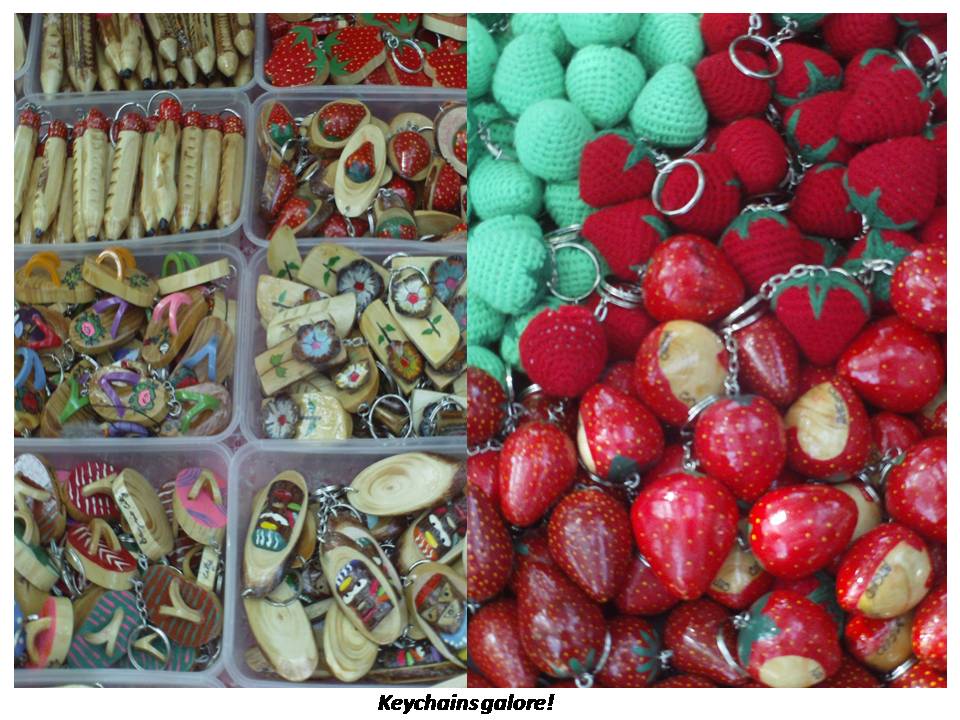
I love key chains. I love giving and, most especially, receiving them as "pasalubongs" (welcome gifts). Not only are they cheap, but when used conspicuously they also never fail to induce remarks like "Oh, who just came from (*insert the name of that famous or would-be famous tourist town you've been eyeing to go to*)? You?!"

In short, they are like silent companions who would brag about the places you've been to for you. Then you can just smile and answer "Yes!"yes

Not in my case though. Because so far I'd only say that for two of those pictured key chains, most of which actually came from a friend who loves to travel.

Yeah, I may not have gone to Boracay, Bohol, Coron, Tagaytay, Cebu or Hundred Islands yet, but I'd make sure one day I will.up
Tuesday, March 20, 2012

WOW DAY IN CARAMOAN (OR WHEN THE SUN SHONE ON US)

The thing about leisure traveling is that it makes the cooperative weather factor the luck of the draw. Yes one can keep an eye on the forecast, but to expect otherwise – like anticipating a sunny day amid a tropical storm – sometimes can’t hurt. Well, just sometimes.

Fixated on pushing ahead with our do-it-yourself Caramoan weekend getaway despite the overhanging bad weather, my friends and I boarded the 45-minute Airphil Express flight to Naga Airport in Pili, Camarines Sur that Friday of July last year. Seemingly enough, luck was on our side, because instead of dark clouds and heavy showers, we were welcomed by a clear blue sky and stifling sun.


Upon arrival at the airport, we took a short tricycle ride to the town’s highway where we hailed a jeepney bound to SM City Naga, which is just across Naga City’s Eastbound Terminal. (If you are thinking of going to Caramoan and following the same procedure as ours, you can also opt for a van to bring you to Sabang Port straight from Naga Airport, though this option may cause a dent in your wallet.)

After having our early lunch at a fastfood, we headed to the terminal and took a less than two-hour van ride to Sabang Port, where we then hopped aboard a service boat bound to Guijalo Port and relished another two-hour travel by sea.


The time of our visit was an off-season, and so we made no reservations at any hotel or inn prior to our trip. So once we were at Guijalo Port, the group went by tricycle to the town’s “centro” and directly checked in at Villa Julliana, taking our cue from friends who stayed at the same inn (and swore by its fairly affordable per-night stay rates) during their Caramoan visit the year previous.

Exploring the town started off by checking out the Bulang-Bugang Cave, an underground stream with no exit, in Barangay Taisan. Unfortunately, we were unprepared to go spelunking so we just opted to immerse our legs into its cool water and take pictures.


Besides the Bulang-Bugang Cave, Caramoan, a second-class municipality on the Caramoan Peninsula, also boasts of the Umang Cave, which is a part of the Caramoan National Park. It also has the Kulapnit Cave (best known for their limestone formations) and the Manipis Cave (rumored to be one of the hiding places of the famous General Yamashita's treasure).

Then we were off to St. Michael the Archangel Parish, as we were advised to go take a look at the said church located just a few meters away from our inn. It is an old red-brick church said to be built by the Franciscan missionaries during the Spanish colonization.

A large courtyard, with well-groomed lawn, houses this church. Locals also say that the church has undergone several renovations over the years. We even saw a proof of this as part of the chapel was under renovation when we dropped by. And so we just took pleasure in taking pictures of the colorful and pretty flowers aplenty in its garden.


We were told that a tour of Caramoan would not be complete without trekking the 500-odd steps to the Shrine of the Blessed Virgin Mary on Mt. Carmel Caglago in Barangay Tabgon. Subscribing to the recommendation, we began our island-hopping the following day by first setting out to scale the otherwise interesting steps (our "tour guides" pointed out that the names written on each step are actually the names of the donors) to the biggest Marian statue I have seen thus far. Reaching the top of Mt. Caglago was a feather in our cap by then, but what we saw was by far greater: a breathtaking 360-degree view of the Caramoan islands.


From mountain hiking, the group, still rather blessed with a brilliant weather, then moved on to cap off our day's activities with our trip's high point and what Caramoan is really famed for: island-hopping.


Caramoan's pristine beaches with their fine-grained sand and crystal clear waters have earned for the place its "next Boracay" sobriquet. That is why it is no wonder that its islands' untouched beauty has been figuring as a favorite host to international franchises of reality TV game show Survivor, such as its Bulgarian, Serbian, Israeli, Swedish and French versions.

In fact during our visit, Survivor India was being filmed, restricting us from some of the islands and even from taking the Paniman beach as our island-hopping starting point. However, we were fortunate enough to have reached the island of Lahos and have our own Survivor mementos (through pictures, of course) before the show's crew came back and packed up their props.


Swimming, snorkeling, climbing the islands' jagged rock cliffs and ostensibly endless picture takings were sandwiched between our hops to the islands of Matukad, Lahos, Cagbalinad and Tawog. For those who are not on a budget unlike us, other equally great adventures such as kayaking and scuba diving are a must in their itineraries.


Caramoan has sure lots to offer as a tourist destination. It's nice to think though that albeit it has been likened to Boracay ("the benchmark against which all local beaches are measured," as one writer puts it), it still manages to be so sans the rowdy crowds and establishments. And yet it holds out its true splendor, of course, when the sun cooperates.Photobucket

(I'd like to thank my travel buddies Oz and Tiny M. and Joja B. for some of the photos above.)

CHECK OUT MY OTHER BLOG